
404 Error: Player Not Found
Many developers don’t think about their audience until they’re getting ready to launch. They build a game they love, assume “it’s for everyone,” and discover too late that if everyone is your audience, no one is.

Ready to learn from some of the sharpest minds in game development?
MIGS26 returns with more stages, more speakers, and more opportunities to grow your business and career.
This year features three content stages – spanning business, external development strategies, and game development tracks – to deliver the insights, strategies, and stories shaping what’s next.
From AAA giants to trailblazing indies, these industry experts have built worlds, launched hits, and led global teams.
Many developers don’t think about their audience until they’re getting ready to launch. They build a game they love, assume “it’s for everyone,” and discover too late that if everyone is your audience, no one is.
In a world where self-publishing has become the default setting for most games studios, the question remains: how do we finance our games? In this panel, we will explore different perspectives on how to address the issue. The discussion will range from emerging new fund models, to changes in financing terms, to the evolution of funder objectives. If you are looking for funding outside the traditional publisher landscape — or looking to invest in games through a new vehicle, this is where you want to be.
This panel will explore the game consumption growth markets of Africa, Latin America, and the Middle East. Often dismissed as insignificant relative to the USA and Chinese global dominance, these more “exotic” regions are experiencing higher degrees of growth in recent years and represent untapped markets for selling our games and finding new fans. Further, each region has its own peculiarities to achieve success, best understood from experts operating in the region.
For decades we’ve seen veteran developers jump ship and start their own studios — but here in 2026, there are new challenges to face, and new strategies to employ. Join Tanya X. Short, Captain of Kitfox Games (established 2013), in learning from Clint Hocking (Build Machine Games, 2026), Kris Schoneberg (Studio Reset, 2026), and Pierre-Andre Dery (Studio Ricochet, 2026) all about the freshest hazards, risks, and rewards they’re facing in their independent journeys. Each studio is following a different path, but all approach the same fundamental problem of how to orient yourself and your team towards that first pitch meeting, with your first game. This panel will NOT discuss funding directly, but rather the logistics and minefields of independent development itself, in a funding-scarce environment.
Most game projects fail long before launch, not because of poor execution, but because there was never real demand for the game in the first place. In this talk, Mike Coeck, CEO of Cybernetic Walrus, shares how a small Belgian indie studio shifted from building games based on assumptions to validating ideas early through a structured approach called the Momentum Framework.
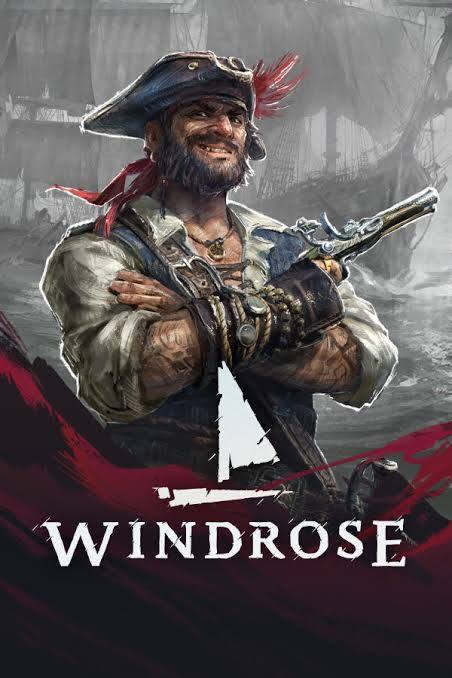
Lets explore how to use organic reach and steam to make a game visible. Windrose has been a noticeable Early access success in April 2026 on Steam, with over 1,5 million wishlists pre-launch. To get there, the team had to rely on organic reach and Steam visibility, with a nearly zero marketing budget throughout most of development cycle. Let’s see what worked and, more importantly, what did not in all the stages of Windrose publishing from early R&D to EA launch.